
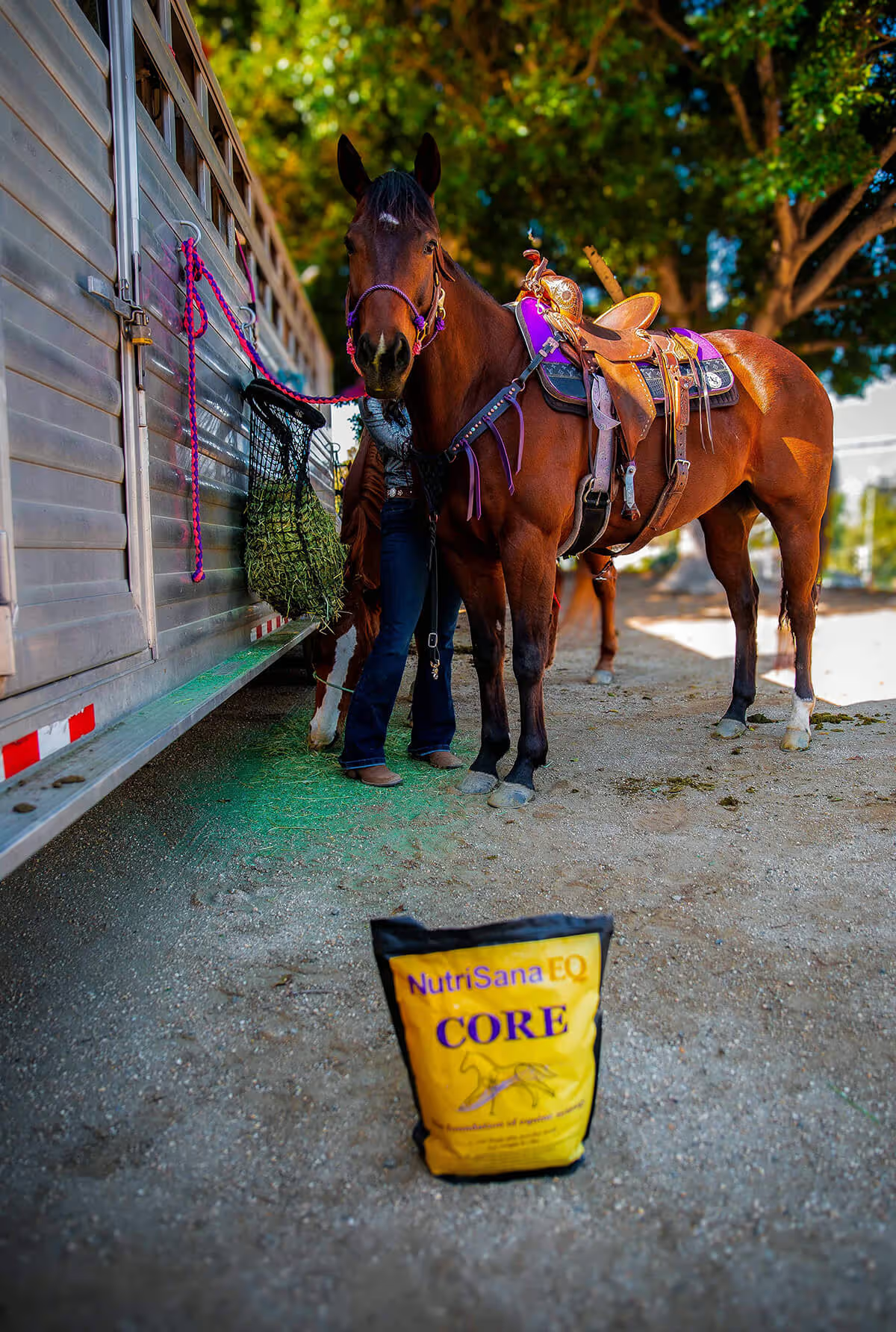
How Gut Health Affects Horse Behavior and Performance
As a barrel racer, I’m obsessed with the one percenters, the small adjustments that lead to a faster time, a cleaner run, and a healthier horse. We work on our mindset, our riding, and our tack, but what if the biggest performance gains are hiding in plain sight, right in the gut?
Improving equine gut health and performance is gaining a lot of attention, and for good reason.
We’ve always known gut health matters, but new research shows it’s not just about preventing colic. Subtle, hidden gut inflammation may be one of the root causes of common performance issues, from resistance under saddle to behavioral problems.
This is not just another trend. This is science confirming what many of us have felt in the saddle for years.
Signs of Gut Issues in Performance Horses
Can Gut Problems Cause Resistance and Behavior Issues?
A recent Finnish study published in Acta Veterinaria Scandinavica looked at 152 horses with suspected inflammatory bowel disease (IBD). What they found should make every performance horse owner stop and think.
The most common complaint from owners was not diarrhea or weight loss. It was poor performance and riding difficulties, including resisting the rider’s aids, refusing to move forward, bucking, or rearing.
Sound familiar?
In fact, 63% of the horses showed at least one gastrointestinal sign, such as free fecal water, but there was no clear relationship between these signs and the biopsy results.
This means a horse can have significant gut inflammation that affects behavior and performance long before obvious digestive symptoms appear. The problem is there, under the surface, and it shows up where you feel it most, under saddle.
Equine Gut Health Research and IBD in Horses
The Finnish veterinary team examined horses that underwent rectal biopsies in 2022, and the results were revealing. Standard rectal biopsies, which are commonly used as a diagnostic tool, proved to be unreliable. Forty percent of the horses showed no inflammation, and when inflammation was present, 78% of cases were classified as mild.
This makes IBD a “disease of exclusion,” meaning veterinarians must rule out other conditions before arriving at a diagnosis. This adds another layer of difficulty when trying to identify the root cause of performance and behavioral issues.
There was also overlap with other conditions. More than one-third of the horses in the study also had gastric ulcers, which can present with nearly identical signs. This highlights how complex equine gut health can be and why a broader, more complete approach to management is often necessary.
Key Research on Horse Gut Health and Performance
| Finding | Implication for Performance Horses |
| Atypical Presentation | Poor performance, resistance, and behavior changes can be early signs of gut inflammation |
| Diagnostic Challenges | Standard tests may not detect underlying gut issues |
| Treatment Response | Dietary changes combined with treatment improved outcomes |
| Pasture Impact | Moving horses to pasture reduced clinical signs by 53% |
| Nutritional Support | Continuous forage and omega-3 support help manage inflammation |
Diet and Pasture for Horse Gut Health
Here’s where things get especially relevant for feeding programs.
Sixty-eight percent of the horses in the study were treated with a combination of corticosteroids and dietary changes. The dietary recommendations were simple but effective:
- Feed more easily digestible hay
- Remove processed feeds
- Increase pasture access
When horses were moved to pasture, clinical signs improved by 53%. While factors like increased movement and feed volume may have contributed, the takeaway is clear. Forage plays a major role in gut health.
The study also highlighted the benefits of omega-3 fatty acids for their anti-inflammatory effects on the gastrointestinal tract. Research in human IBD supports this, and similar principles appear to apply in horses.
How This Connects to the NutriSana EQ Approach
This research strongly supports the forage-first, science-backed approach behind NutriSana EQ. Performance horses do not break down from one bad day. They wear down from repeated stress over time. Gut issues, inflammation, soft tissue strain, and inconsistent nutrition all add up.
Forage-First Feeding and Gut Health Support
The improvement seen with pasture access alone shows how powerful a forage-based diet can be. Horses are designed to graze, and supporting that natural behavior creates a stronger foundation for gut health and performance.
NutriSana EQ is built to support that foundation, not replace it.
Anti-Inflammatory Nutrition for Horses
The study highlights omega-3 fatty acids as a key factor in reducing gut inflammation. This aligns with the NutriSana EQ formulation approach, using targeted ingredients to support internal balance.
Whole Horse Health: Gut, Recovery, and Performance
Gut health does not exist in isolation. It affects behavior, comfort, recovery, and performance.
A horse with gut inflammation may not just show digestive issues. It may show resistance, tension, or lack of willingness to work.
Supporting the gut supports the entire system.
How Gut Health Impacts Horse Performance
This study shows that not every performance issue is a training problem. If your horse feels off, resistant, or inconsistent, it may be a sign of internal imbalance. Supporting gut health helps improve performance, recovery, and overall consistency over time.
What Gut Health Means for Your Horse’s Feeding Program
This is not about diagnosing your horse with IBD, but about recognizing how closely equine gut health and performance are connected. If your horse does not feel right, it may be worth looking deeper.
A forage-first approach, consistent access to hay or pasture, and targeted nutritional support can make a meaningful difference by building a system that works with your horse’s natural physiology rather than adding unnecessary products.
Horse Nutrition and Gut Health for Long-Term Performance
Equine nutrition is moving toward a more focused, science-based approach that prioritizes long-term health and consistent performance. Instead of relying on guesswork, the goal is to support the horse from the inside out through proper nutrition, gut health, and recovery.
Better gut health leads to better nutrient use, improved recovery, smoother movement, and more consistent results over time. That is the NutriSana EQ approach, building stronger, more resilient horses one step at a time.